
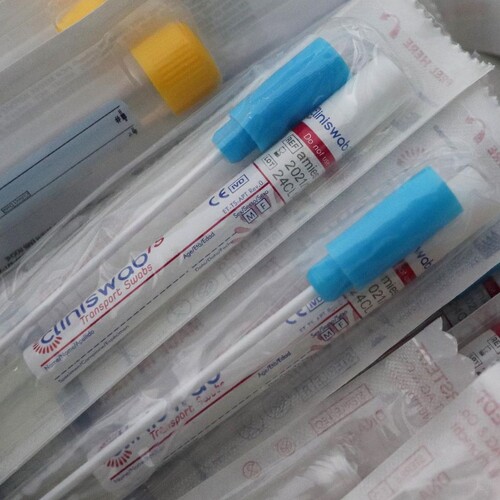
A prenatal paternity test can become contaminated or compromised if samples are not collected, labelled, packaged, or shipped correctly. In most cases, contamination does not simply “change” the result. Instead, the laboratory may be unable to produce a reliable DNA profile from the sample and may request a new sample before testing can continue.
This is one reason proper collection is so important. A non-invasive prenatal paternity test uses a blood sample from the pregnant mother and DNA samples from the potential father or fathers. If the cheek swab, blood sample, forms, labels, or packaging are handled incorrectly, the test may be delayed, rejected, or reported as inconclusive.
The good news is that most sample issues can be prevented by following the collection instructions carefully. Below, we explain how prenatal paternity test samples can become contaminated, what contamination actually means, whether it can cause a false result, and how to reduce the risk before sending your samples to the laboratory.
What Does Contamination Mean in a Prenatal Paternity Test?
In DNA testing, contamination means that unwanted material may have affected the sample. This can include food particles, tobacco residue, bacteria, another person’s DNA, moisture, mould, or a sample mix-up during collection or packaging.
For a prenatal paternity test, sample quality matters because the laboratory needs usable genetic material from each person being tested. A non-invasive prenatal paternity test typically involves:
- A maternal blood sample from the pregnant mother
- A DNA sample from the potential father, usually collected with cheek swabs
- In some cases, samples from more than one potential father
- Laboratory analysis comparing the fetal DNA found in the mother’s blood with the DNA profile of the tested potential father or fathers
If one of these samples is compromised, the laboratory may not be able to generate a clear DNA profile. This can delay the final report because the affected sample may need to be collected again.
Can Contamination Cause a False Prenatal Paternity Result?
A common concern is whether contamination can make a prenatal paternity test show the wrong father. In most properly controlled laboratory processes, contamination is more likely to cause a failed, rejected, delayed, or inconclusive sample than to silently create a false result.
For example, if a cheek swab does not contain enough usable cheek cells, or if the swab has been affected by food, smoke, moisture, or another sample, the issue may prevent the laboratory from generating a clean DNA profile. In that situation, the safer outcome is usually to request a new sample rather than issue a result based on poor-quality material.
That said, sample quality should always be taken seriously. Prenatal paternity testing is sensitive, and the result can carry emotional, personal, and sometimes legal importance. The best approach is to prevent contamination from the beginning by following the instructions exactly, keeping each participant’s samples separate, and contacting the laboratory if you believe a collection mistake may have happened.
Common Ways a Prenatal Paternity Test Sample Can Get Contaminated
There are several ways a prenatal paternity test sample can become compromised. Some issues are related to the potential father’s cheek swab. Others involve packaging, shipment, labelling, or the maternal blood sample.
1. Eating, Drinking, Smoking, or Brushing Before a Cheek Swab
Many paternity test sample issues happen before the swab is even collected. The potential father’s DNA sample is usually collected by rubbing a swab against the inside of the cheek. This is meant to collect cheek cells, not saliva alone.
Eating, drinking, smoking, chewing gum, using tobacco products, brushing teeth, or using mouthwash shortly before collection can introduce substances into the mouth. These substances do not change a person’s DNA, but they can reduce the quality of the cheek swab and make it harder for the laboratory to extract a clean DNA profile.
For best results, the person being swabbed should avoid eating, drinking, smoking, chewing gum, brushing their teeth, or using mouthwash before collection for the amount of time listed in the laboratory’s instructions.
2. Using Spit Instead of Proper Cheek Cells
A common mistake is assuming that a paternity test swab is a saliva test. It is not enough to simply spit on the swab or wet the swab with saliva. The purpose of the buccal swab is to collect cells from the inside of the cheek.
Cheek cells contain the DNA needed for testing. If the swab is mostly saliva and does not collect enough cheek cells, the sample may have insufficient DNA. This can lead to delays or a request for recollection.
To avoid this, the swab should be firmly rubbed against the inside of the cheek according to the instructions provided with the testing kit. Each swab should be handled carefully and placed in the correct envelope or container after collection.
3. Touching the Swab Tip
The swab tip should not be touched with fingers before or after collection. Touching the tip can transfer oils, skin cells, bacteria, or another person’s DNA onto the sample.
This is especially important if one person is helping another person collect their sample. The person assisting should avoid touching the collection end of the swab and should follow any instructions about handwashing, gloves, drying time, and packaging.
If the swab falls on the floor, touches a countertop, comes into contact with clothing, or is handled by the wrong person, contact the laboratory before sending it in. It may be safer to collect a new sample.
4. Cross-Contamination Between Participants
Cross-contamination can happen when samples from different people come into contact with each other. This risk is higher when more than one potential father is being tested or when multiple samples are collected at the same time.
Examples include:
- Placing two people’s swabs in the same envelope
- Mixing up labelled envelopes
- Opening multiple people’s swabs at the same time
- Having one participant touch another person’s swab
- Collecting samples in a crowded or disorganized area
- Using the wrong form or label for the wrong participant
When more than one potential father is involved, organization is critical. Open and collect one person’s sample at a time. Label everything immediately. Keep each participant’s swabs, forms, and envelopes separate from the beginning.
5. Sealing Swabs While They Are Wet
Cheek swabs may be slightly damp after collection. If a swab is sealed improperly while wet, especially in the wrong type of packaging, it may degrade or become affected by moisture. In some cases, excess moisture can contribute to mould or make the sample unsuitable for testing.
Always follow the kit instructions for drying and packaging. If the instructions say to allow swabs to air dry or place them in a specific paper envelope, do not replace that process with plastic bags, plastic wrap, or unapproved containers.
6. Using Plastic Bags or Unapproved Packaging
DNA samples should be packaged exactly as instructed. A common mistake is placing swabs inside plastic bags because it seems cleaner or safer. However, plastic can trap moisture and may increase the chance of sample degradation.
Use the materials provided in the kit. If an envelope, pouch, tube, or courier package is included, use it the way the instructions describe. Do not improvise with household packaging unless the laboratory specifically tells you to do so.
7. Shipping Delays or Poor Storage Conditions
After collection, samples should be returned to the laboratory as instructed. Delayed shipment, exposure to heat, moisture, or poor storage conditions can affect sample quality.
If you collect a sample but cannot ship it right away, follow the laboratory’s storage instructions. Do not leave samples in a hot car, damp area, bathroom, or any place where they could be exposed to moisture or temperature extremes.
Contaminated Sample vs. Inconclusive Result: What Is the Difference?
A contaminated sample and an inconclusive result are related, but they are not always the same thing.
A contaminated or compromised sample means the laboratory may not have clean, usable DNA material from one or more participants. This can happen because of collection mistakes, packaging problems, moisture, sample mix-ups, or insufficient DNA.
An inconclusive result means the laboratory could not provide a clear inclusion or exclusion based on the available information. This can happen for different reasons, including insufficient fetal DNA, sample quality issues, complex biological situations, or the need for additional samples.
In simple terms:
- A contaminated sample is often a sample quality problem.
- An inconclusive result is a final testing outcome where the available data does not allow a clear conclusion.
- A sample problem may lead to recollection before a final report is issued.
- An inconclusive result may require additional guidance from the laboratory.
If you receive a notice about a contaminated sample, insufficient DNA, or an inconclusive result, contact the laboratory directly. The next step depends on the specific reason the sample could not be completed as expected.
What Happens If a Prenatal Paternity Test Sample Is Contaminated?
If a sample is contaminated or does not generate a usable DNA profile, the laboratory may request that the sample be collected again. This can delay the result because testing may need to pause until the replacement sample is received and processed.
Depending on the situation, the laboratory may request:
- A new cheek swab from the potential father
- A new sample from another participant
- A new maternal blood sample later in pregnancy
- Clarification of forms, labels, or participant information
- Additional documentation if there is a chain-of-custody or identity issue
The exact process depends on the type of sample affected and the reason the sample could not be used.
How to Prevent Prenatal Paternity Test Sample Contamination
Most collection problems can be avoided with careful preparation. Before collecting any sample, read the instructions fully from beginning to end.
Use this checklist to reduce the risk of sample contamination:
- Read the full collection instructions before starting.
- Collect samples in a clean, dry, organized area.
- Wash and dry your hands before handling collection materials.
- Do not touch the tip of any cheek swab.
- Do not eat, drink, smoke, chew gum, brush teeth, or use mouthwash before cheek swab collection for the time period listed in the instructions.
- Collect one participant’s sample at a time.
- Keep each participant’s samples separate.
- Label every envelope, tube, and form clearly.
- Do not place cheek swabs in plastic bags unless specifically instructed.
- Allow swabs to dry if the instructions require it.
- Use the packaging provided in the kit.
- Ship samples back to the laboratory as instructed.
- Contact the laboratory if you believe a mistake happened during collection.
If you are unsure whether a sample was collected properly, do not guess. Contact the laboratory before sending the kit back.
Is Professional Sample Collection Better Than At-Home Collection?
At-home cheek swab collection can work well when instructions are followed carefully. However, professional or coordinated sample collection can help reduce certain risks, especially when the test involves multiple participants, sensitive circumstances, or legal considerations.
Professional collection may help reduce:
- Labelling errors
- Participant identity confusion
- Sample mix-ups
- Incomplete forms
- Chain-of-custody concerns
- Incorrect blood collection tubes or handling
For a non-invasive prenatal paternity test, the maternal blood sample is usually collected by a qualified professional at a local laboratory, hospital, or blood collection location. The potential father’s sample may be collected using cheek swabs, depending on the instructions provided with the kit.
Can a Prenatal Paternity Test Be Wrong Because of Contamination?
It is understandable to worry about this. A prenatal paternity result can affect major emotional and personal decisions. However, contamination is usually not a simple situation where a sample is contaminated and the lab unknowingly issues the wrong result.
More commonly, a poor-quality or compromised sample creates a problem during analysis. The laboratory may not be able to generate a usable DNA profile, may detect that the sample is unsuitable, or may require recollection before continuing.
This is why choosing an experienced laboratory and following sample collection instructions carefully are both important. The goal is to reduce the chance of delays, recollections, inconclusive results, or preventable uncertainty.
When Should You Contact the Laboratory Before Sending Samples?
Contact the laboratory before shipping your kit if any of the following happened:
- Someone ate, drank, smoked, or brushed their teeth shortly before cheek swab collection.
- A swab touched a counter, floor, clothing, or another surface.
- The swab tip was touched by another person.
- Swabs from two people may have been mixed up.
- The wrong label or form may have been used.
- A swab was placed in plastic or sealed while wet.
- The maternal blood sample was collected in the wrong tube.
- Samples were left in heat, moisture, or poor storage conditions.
- You are not sure whether the pregnancy is far enough along for testing.
- More than one potential father is being tested and you are unsure how to organize the samples.
It is better to ask before sending the sample than to risk a delay after the kit arrives at the laboratory.
Frequently Asked Questions About Prenatal Paternity Test Contamination
Can a prenatal paternity test be contaminated?
Yes. A prenatal paternity test sample can be contaminated or compromised if the cheek swab, blood sample, packaging, labelling, or shipping process is not handled correctly. Contamination may lead to a rejected sample, a request for recollection, a testing delay, or an inconclusive result.
Can eating or drinking affect a paternity test cheek swab?
Eating, drinking, smoking, chewing gum, brushing teeth, or using mouthwash before cheek swab collection can affect the quality of the sample. These substances do not change your DNA, but they can make it harder for the laboratory to obtain a clean DNA profile from the cheek cells.
Is a cheek swab the same as a saliva sample?
No. A cheek swab is meant to collect cells from the inside of the cheek. Simply adding spit or saliva to the swab is not the same thing. The swab should be rubbed against the inside of the cheek according to the instructions provided in the kit.
Can contamination make a paternity test show the wrong father?
In most cases, contamination is more likely to cause a sample failure, delay, recollection, or inconclusive result than to silently create a false paternity result. If a laboratory cannot produce a reliable DNA profile from a sample, it may request a new sample before completing the test.
What happens if my paternity test sample is contaminated?
If a sample is contaminated or does not contain enough usable DNA, the laboratory may ask for a new sample. This can delay the result because testing may not be able to continue until the replacement sample is received.
Can low fetal DNA cause an inconclusive prenatal paternity test?
Yes. If there is not enough fetal DNA in the maternal blood sample, the laboratory may not be able to complete the analysis. This can happen if the test is performed too early or if the fetal DNA level is too low at the time of collection.
How can I prevent paternity test sample contamination?
Follow the instructions carefully, avoid eating or smoking before cheek swab collection, do not touch the swab tip, keep every participant’s sample separate, label all materials clearly, use the provided packaging, and ship the kit as instructed.
Should I collect a new sample if I think I made a mistake?
If you believe a sample may have been collected incorrectly, contact the laboratory before sending it in. Depending on the situation, the laboratory may advise you to collect a new sample rather than risk a delay.